Bosnia and Herzegovina is known for its mountains, clear rivers and varied natural landscapes. Across the country, rivers flow through limestone valleys, forests and deep gorges, creating waterfalls of many different shapes and sizes. Some are major natural attractions with established visitor areas, while others are smaller and quieter places that require a little more effort to find.
The best-known waterfalls include Kravica in Herzegovina, Štrbački buk in Una National Park and the Pliva Waterfall in the historic town of Jajce. However, there are many other interesting places to discover, including the waterfalls around Martin Brod, Bliha Waterfall near Sanski Most and the smaller cascades at Koćuša.
Whether you are planning a trip through Bosnia and Herzegovina or looking for places to visit away from the main tourist routes, these waterfalls offer a good introduction to the country’s natural attractions.
Waterfalls in Herzegovina
The southern part of Bosnia and Herzegovina is particularly interesting for its rivers, limestone landscapes and tufa formations. Several waterfalls can be visited around Ljubuški and the wider Herzegovina region, making them suitable additions to a trip around Mostar and other nearby destinations.
1. Kravica Waterfall
Kravica is probably the best-known waterfall in Bosnia and Herzegovina. Located on the Trebižat River near Ljubuški, it forms a broad semicircular cascade surrounded by vegetation and limestone cliffs. The waterfall is approximately 25 to 28 metres high, although its appearance changes with the water level.
Below the falls, the river forms a natural pool that makes the area especially popular during the warmer months. There are established visitor facilities, walking paths and places to relax, although conditions and permitted activities can vary depending on the season.
Kravica is often visited on day trips from Mostar, but it is also worth combining with some of the smaller natural attractions in the Ljubuški area.
2. Koćuša Waterfall
Koćuša Waterfall is another attractive stop on the Trebižat River, located near the village of Veljaci in the Ljubuški area. Unlike the taller Kravica, Koćuša is a wide, relatively low waterfall, approximately five metres high and around 50 metres across.
Its setting is particularly interesting because of the traditional watermills and other historic water-powered structures beside the river. These features give Koćuša a different character from the larger and more frequently visited waterfalls in the region.
It is a good place to include in a wider Herzegovina itinerary, especially when visiting Kravica.
3. Žukovica Waterfall
Žukovica Waterfall is a lesser-known natural attraction near the village of Vir in the municipality of Posušje. Surrounded by rocks and vegetation, the waterfall is particularly attractive during periods of higher water flow.
Spring and autumn are generally more promising times to see it with a stronger flow, while its appearance can change considerably during drier weather.
Žukovica is an interesting option for visitors exploring the less familiar natural attractions of western Herzegovina. It is not as developed as Kravica, so it is worth checking local directions and access information before setting out.
4. Provalije Waterfall, Stolac
The Bregava River passes through Stolac, creating a series of smaller cascades, channels and waterfalls within the town. One of the best-known is Provalije, where the river flows over a rocky section below the historic residential area.
This is a different kind of waterfall experience from visiting a remote natural site. Provalije is part of the wider river landscape of Stolac, where bridges, old buildings, gardens and water are closely connected.
It can easily be included when exploring the town and its historic attractions.
Waterfalls in Northwestern Bosnia
Northwestern Bosnia is home to some of the country’s most impressive river landscapes. The Una River and its tributaries have created waterfalls, rapids and cascades within forested valleys and settlements. This region is particularly rewarding for visitors interested in nature and outdoor activities.
5. Štrbački buk
Štrbački buk is one of the most spectacular waterfalls in Bosnia and Herzegovina. It is located on the Una River within Una National Park, close to the border with Croatia.
The waterfall is approximately 24.5 metres high and is formed by the river flowing over natural tufa barriers. Rather than being a single narrow stream, the Una spreads across the rocky riverbed, creating powerful cascades and smaller falls.
Woodland surroundings and viewing areas make it an impressive natural attraction. The waterfall is also a popular starting point for exploring this part of Una National Park, although the approach requires planning because the access road is not the same as an ordinary journey to a town attraction.
6. Martin Brod Waterfalls
Martin Brod is a small settlement within Una National Park, known for its collection of waterfalls and cascades. Here, the Una and Unac rivers meet, creating a landscape of flowing water, tufa formations and small channels.
Milančev buk is among the best-known waterfalls in the area. Other cascades flow through and around the settlement, making Martin Brod interesting to explore at a slower pace.
The village also has traditional watermills and a long connection with the river. It is worth giving Martin Brod a separate visit rather than treating it simply as a quick stop on the way to Štrbački buk.
7. Bliha Waterfall
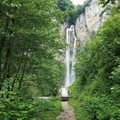
Bliha Waterfall, also known as Blihin Skok, is located near Sanski Most in northwestern Bosnia. The Bliha River flows over a rocky edge into a forested setting, creating one of the region’s more distinctive waterfalls.
The waterfall is often reported to be around 50 to 56 metres high, although measurements and descriptions vary between sources. Its appearance depends on the amount of water flowing through the river, with wetter periods generally offering a more impressive display.
A visit involves walking through the natural surroundings to reach the waterfall. The area is particularly attractive for visitors looking for a quieter natural destination away from the country’s busiest tourist sites.
8. Janjske Otoke
Janjske Otoke, near Šipovo, is not a single large waterfall but a beautiful river landscape formed by the Janj River. The water divides into numerous channels, flowing around small islands and over natural cascades.
Wooden bridges, traditional watermills and lush vegetation make this one of the most picturesque places in the region. The combination of flowing water and dense greenery gives Janjske Otoke a character quite different from the country’s larger waterfalls.
It is a particularly pleasant destination for a relaxed walk and photography. Visitors exploring the wider area can also consider a trip to the Janj primeval forest, although access to its strictly protected area is subject to special arrangements.
Waterfalls in Central Bosnia
Central Bosnia has several waterfalls that can be combined with visits to historic towns, mountain villages and natural attractions. Some are well-known destinations, while others remain less familiar to international visitors.
9. Pliva Waterfall, Jajce
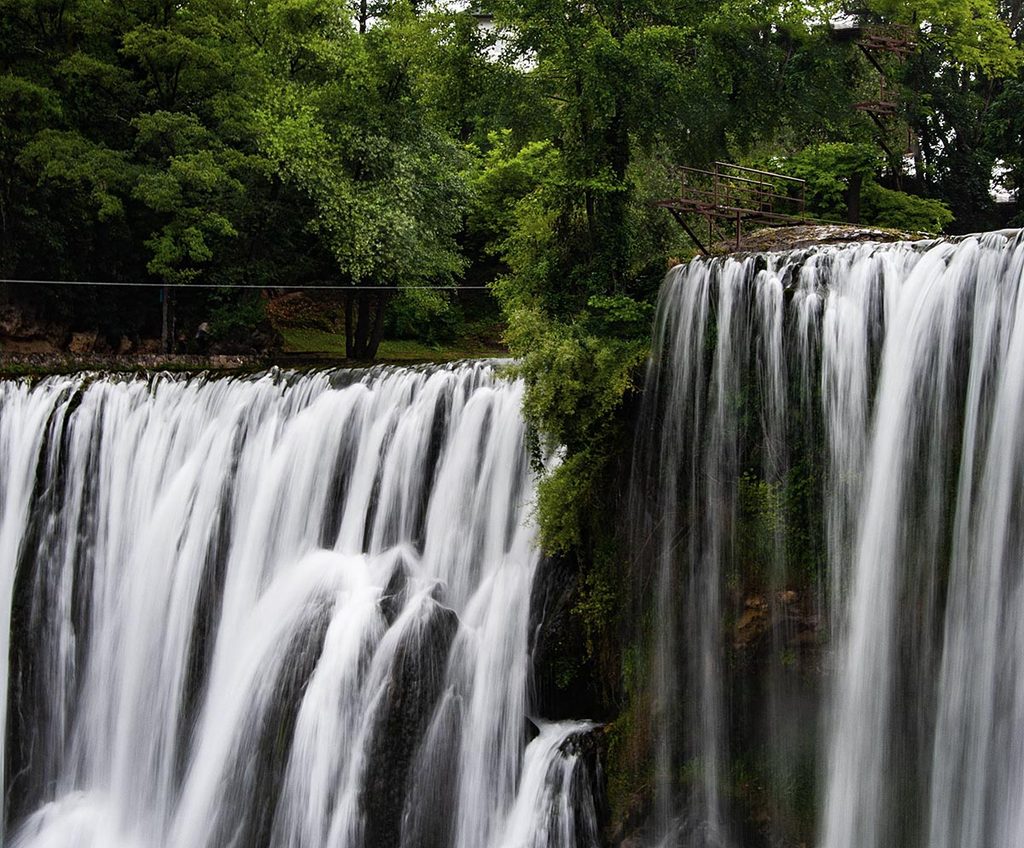
The Pliva Waterfall is one of the most unusual waterfalls in the country because it is located in the centre of Jajce. The Pliva River flows over a natural tufa barrier before joining the Vrbas River below the town.
The waterfall is approximately 22 metres high and can be viewed from several points around the town. Its position below the historic centre makes it possible to combine a waterfall visit with Jajce’s fortress, old streets and other cultural attractions.
The nearby Pliva Lakes and the traditional watermills at Mlinčići are also worth visiting, although they are separate attractions outside the town centre.
10. Kozice Waterfalls
The Kozice Waterfalls are located near the village of Dragačići, in the Fojnica area. The Kozica River flows through a wooded landscape, forming several waterfalls and smaller cascades.
The area is often described as having three smaller waterfalls and one larger fall, with the tallest commonly reported at around 20 metres. The natural setting, surrounded by forest and rocks, makes it an appealing destination for walking and photography.
Kozice is a good example of a waterfall that receives less attention than the country’s major tourist attractions, despite offering an attractive natural environment.
11. Ždrimački Waterfall
Ždrimački Waterfall, also known as Crndolski Waterfall, is located near the village of Ždrimci in the municipality of Gornji Vakuf-Uskoplje.
The waterfall is formed by the Crndol stream, which flows over a rocky drop surrounded by natural vegetation. It is often reported to be approximately 29 metres high, although the amount of water varies throughout the year.
The waterfall is particularly attractive after periods of rainfall and during the spring, when the surrounding landscape is greener and the stream is generally stronger. It is a worthwhile addition for visitors exploring the less familiar natural attractions of central Bosnia.
Waterfalls Around Sarajevo and Eastern Bosnia
The mountains and forests around Sarajevo and eastern Bosnia contain several waterfalls that can be reached on hiking trips or as part of visits to protected natural areas.
12. Skakavac Waterfall near Sarajevo
Skakavac is one of the most popular natural attractions in the Sarajevo area. Located north of the city, the waterfall drops approximately 98 metres from a rocky cliff into a forested valley.
The name Skakavac is used for more than one waterfall in Bosnia and Herzegovina, so it is important not to confuse the Sarajevo waterfall with the one in Perućica or the waterfall near Kotor Varoš.
The Sarajevo waterfall is reached by walking trails through the forest. It makes a rewarding day trip for visitors who want to experience the natural surroundings close to the capital.
13. Skakavac Waterfall in Perućica
Another waterfall called Skakavac is located inside Perućica, one of Europe’s remaining primeval forests, within Sutjeska National Park.
The waterfall is formed by the stream of the same name and is commonly described as approximately 75 to 80 metres high. It falls through a densely forested landscape, making it one of the most impressive natural sights in the park.
Unlike the Skakavac near Sarajevo, this waterfall is in a protected wilderness area. Access to Perućica is controlled and requires prior arrangements with the national park. It should not be approached as an ordinary independent hiking destination.
14. Bereški Waterfall
Bereški Waterfall is a lesser-known natural attraction near the village of Rakitnica in the Rogatica area of eastern Bosnia. The Bereg River flows into the Rakitnica River here, creating a waterfall that descends over a rocky edge into a small natural pool.
The waterfall is often described as approximately 12 metres high. Its setting, with clear water and surrounding rock formations, makes it an interesting destination for those exploring the quieter parts of eastern Bosnia.
Because it is not a major developed tourist site, visitors should check local access information and plan their journey carefully.
15. Skakavac Waterfall near Kotor Varoš
The name Skakavac also belongs to a waterfall near Kotor Varoš in northern Bosnia. It is a separate destination from the waterfalls near Sarajevo and inside Perućica.
The waterfall is found in a wooded natural setting and is one of the lesser-known attractions in this part of the country. It is worth considering for visitors exploring the wider Kotor Varoš area, particularly those interested in nature destinations beyond the main tourist routes.
When Is the Best Time to Visit Waterfalls in Bosnia and Herzegovina?
Waterfalls can be visited throughout much of the year, but their appearance changes with rainfall, snowmelt and seasonal river levels.
Spring is often one of the best periods for seeing waterfalls with stronger water flow. Melting snow and regular rainfall can make rivers and streams more powerful, particularly in mountainous areas.
Summer is a popular time for visiting waterfalls such as Kravica, where the surrounding visitor area is suited to a longer outdoor stop. However, smaller waterfalls and streams can have noticeably less water during dry periods.
Autumn brings changing colours to the forests and can be an excellent time for photography, especially after rainfall. Winter visits can also be rewarding, as some waterfalls partially freeze, although access roads and walking paths may become difficult.
Before visiting, check local conditions and any restrictions in protected areas. Not every waterfall has developed visitor facilities, marked trails or unrestricted access.
Exploring the Waterfalls of Bosnia and Herzegovina
The waterfalls of Bosnia and Herzegovina are spread across different regions, so visiting them all requires more than one trip. Kravica and Koćuša make good additions to a Herzegovina itinerary, while Štrbački buk and Martin Brod deserve time when exploring Una National Park. Jajce offers a particularly convenient combination of a waterfall and historic town attractions, while places such as Bliha, Kozice and Ždrimački provide opportunities to discover less familiar natural landscapes.
There are also many smaller cascades, springs and river landscapes worth exploring. As more destinations are covered in individual guides, this collection will continue to grow and provide a broader picture of the country’s natural attractions.
Map
Similar info:
 Una National Park, Bosnia and Herzegovina: Waterfalls, Rafting and Outdoor Activities
 Jajce, Bosnia and Herzegovina: Waterfalls, Lakes and Historic Attractions
 Janjske Otoke, Bosnia and Herzegovina: A Guide to the Waterfalls and River Landscapes
 Bliha Waterfall, Bosnia and Herzegovina: A Guide to Blihin Skok