Jajce is one of the most distinctive towns in Bosnia and Herzegovina, combining an impressive natural setting with centuries of history. Located in central Bosnia, the town is best known for its spectacular waterfall, where the Pliva River meets the Vrbas River, but there is much more to discover beyond this famous landmark.
Once an important royal centre of the medieval Bosnian Kingdom, Jajce has preserved a remarkable collection of historical monuments, including a medieval fortress, underground catacombs, old churches and Ottoman-era buildings. Just outside the town, the Pliva Lakes and their traditional wooden watermills provide another reason to explore the area.
Whether visiting as part of a road trip through Bosnia and Herzegovina or planning a longer stay, Jajce offers a combination of history, nature and outdoor activities.
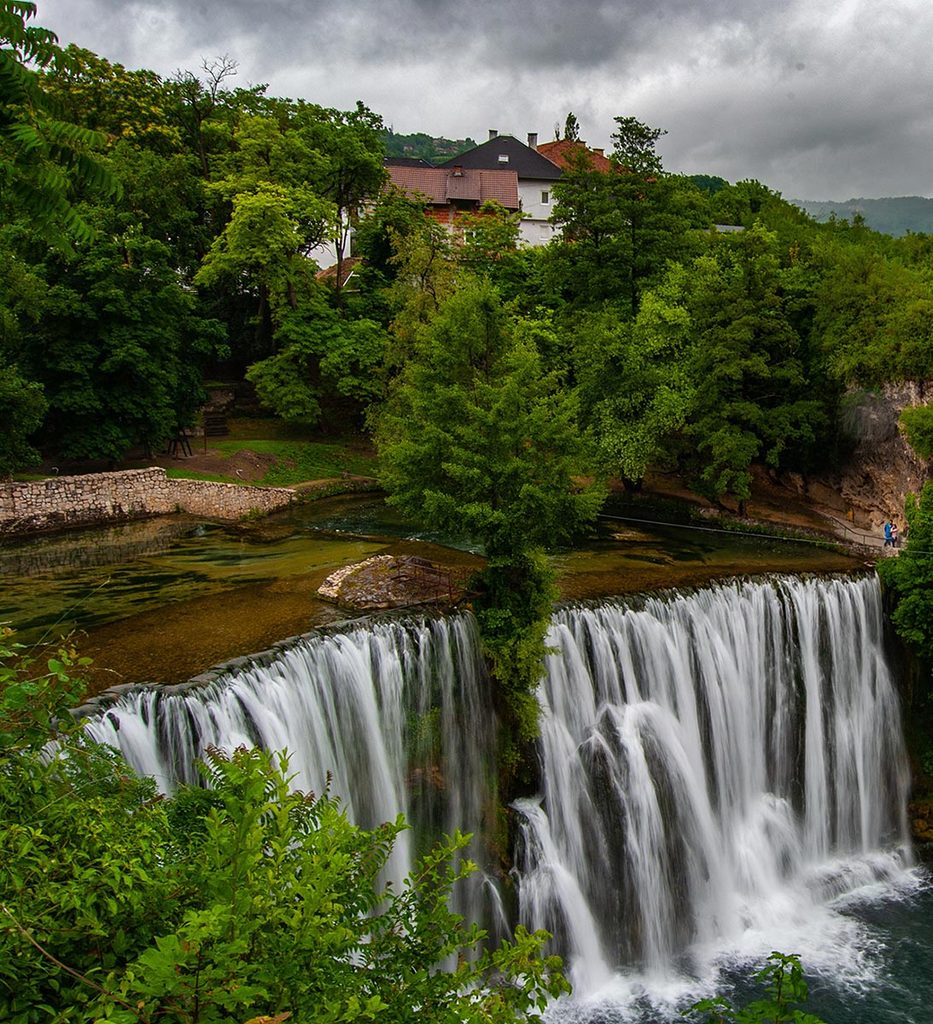
1. Jajce Waterfall
The most famous attraction in town is undoubtedly Jajce Waterfall, located close to the historic centre. Here, the Pliva River drops over a natural travertine barrier into the Vrbas River, creating an impressive waterfall surrounded by steep rock formations.
Unlike many waterfalls that require a hike through remote countryside, this one is located directly within the town. Visitors can admire it from several viewpoints, including a specially arranged viewing area near its base.
The waterfall is particularly impressive after periods of heavy rainfall, when the volume of water increases. It is also one of the most photographed landmarks in Bosnia and Herzegovina.
The waterfall is an excellent starting point for exploring Jajce, with several other attractions within walking distance.
2. Jajce Fortress
Standing above the town, Jajce Fortress is one of the most important historical landmarks in the area. Its elevated position provides views across the rooftops of the old town and the surrounding valleys.
The fortress dates back to the medieval period, when Jajce was an important political and military centre of the Bosnian Kingdom. It was closely associated with the Kotromanić dynasty and served as a royal residence.
Jajce became the last seat of the independent medieval Bosnian Kingdom before the Ottoman conquest in 1463.
Today, visitors can explore the remaining defensive walls and walk along sections of the fortress, enjoying panoramic views of the town and surrounding landscape.
3. The Catacombs of Jajce
Another unusual historical attraction is the Underground Church, commonly known as the Catacombs of Jajce.
Carved into the rock during the early 15th century, this underground complex was commissioned by Hrvoje Vukčić Hrvatinić, an influential Bosnian nobleman. It was intended as a burial place for him and his family.
The interior contains several carved chambers and religious symbols, making it an interesting example of medieval religious architecture in the region.
The catacombs are among the more unusual historical sites in Bosnia and Herzegovina and provide an insight into the religious and political history of medieval Jajce.
4. Pliva Lakes
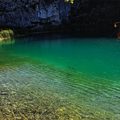
A short distance from the town centre, the Pliva Lakes offer a completely different atmosphere. Surrounded by wooded hills and green countryside, the Great and Small Pliva Lakes are popular destinations for visitors looking for outdoor activities and relaxation.
The lakes are suitable for fishing, boating, kayaking and other water-based activities, while their shores provide opportunities for walking and enjoying the scenery.
During warmer months, the area becomes a popular place for spending time outdoors. Visitors can also find places to eat and enjoy views across the water.
The lakes are worth including in any visit to Jajce, particularly for travellers who want to explore beyond the historic centre.
5. The Wooden Watermills of Mlinčići
One of the most photographed locations around Jajce is Mlinčići, a collection of traditional wooden watermills situated between the Great and Small Pliva Lakes.
The small mills were built across a natural barrier between the lakes, using the movement of water to operate their grinding mechanisms. Historically, local families used them to grind grain and support agricultural activities.
The watermills reflect a traditional way of life that was once common in the region. Although they are no longer an essential part of everyday agricultural production, they remain an important cultural and historical feature.
Their picturesque setting, surrounded by water and greenery, makes Mlinčići a particularly attractive stop for photographers and visitors.
6. Museum of the Second Session of AVNOJ
Jajce also played an important role in the history of the former Yugoslavia.
The Museum of the Second Session of AVNOJ is dedicated to the meeting of the Anti-Fascist Council for the National Liberation of Yugoslavia, held in Jajce on 29 and 30 November 1943.
During this meeting, important political decisions were made concerning the future organisation of Yugoslavia after the Second World War.
The museum is located in the building where the session took place and presents documents and historical material connected with the event.
For visitors interested in 20th-century Balkan history, it provides an opportunity to understand another important chapter in Jajce’s past.
7. Church of St Mary and the Bell Tower of St Luke
The historic centre also contains the remains of the Church of St Mary and the Bell Tower of St Luke, important landmarks reflecting the town’s medieval religious heritage.
The church was an important religious building during the period of the Bosnian Kingdom. Its bell tower, associated with St Luke, remains one of the recognisable features of the old town.
The site reflects the different cultural and religious influences that shaped Jajce over the centuries.
Its location near other historical monuments makes it easy to include during a walking tour of the town.
8. Mithraeum
Another interesting historical site is the Mithraeum, an ancient Roman temple dedicated to the god Mithras.
Dating from approximately the 3rd century, the monument provides evidence of the Roman presence and religious traditions in the region.
The remains include carved representations associated with the Mithraic cult, including the well-known scene of Mithras sacrificing a bull.
The site is particularly interesting for visitors interested in archaeology and the ancient history of Bosnia and Herzegovina.
9. Esma Sultanija Mosque
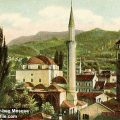
Among the Ottoman-era landmarks in Jajce is Esma Sultanija Mosque, an 18th-century religious building associated with Esma Sultan, who is traditionally linked to its construction.
The mosque is an important part of the town’s architectural heritage and reflects the Ottoman influence that shaped Jajce following the conquest of the medieval Bosnian Kingdom.
It is worth including while exploring the historic centre, particularly for visitors interested in the town’s architectural and cultural diversity.
10. Explore the Vrbas River and Surrounding Countryside
The natural surroundings of Jajce offer further opportunities for outdoor activities.
The Vrbas River, which receives the waters of the Pliva River beneath the famous waterfall, is well known for its clear water, dramatic scenery and recreational opportunities.
The wider river area is popular for fishing and water-based activities, while the surrounding countryside offers scenic drives and opportunities to explore smaller settlements and natural landscapes.
Travellers continuing towards Banja Luka can also enjoy the Vrbas River Canyon, one of the more scenic road sections in this part of Bosnia and Herzegovina.
How to Get to Jajce
Jajce is located in central Bosnia and Herzegovina and is accessible by road from several major cities.
The town is connected by the M5 and M16 roads, making it a convenient stop for travellers exploring the country by car.
Approximate driving times are:
- Banja Luka: around 1.5 hours
- Travnik: around 1 hour
- Sarajevo: around 3 hours
- Mostar: around 3 hours, depending on the route and traffic
Buses also connect Jajce with destinations including Sarajevo, Banja Luka, Travnik and Bihać. However, departure times and journey durations vary, so checking current timetables before travelling is recommended.
There is no railway station in Jajce. Travellers arriving by train will need to continue by road from another town.
Best Time to Visit Jajce
Jajce can be visited throughout the year, although late spring, summer and early autumn are generally the most convenient periods for exploring both the town and the surrounding lakes.
Summer is particularly suitable for outdoor activities around Pliva Lakes, including boating, kayaking and spending time by the water. Spring and autumn offer pleasant conditions for sightseeing and exploring the historic centre.
Winter brings a different atmosphere, especially when the surrounding hills are covered in snow. However, some visitor facilities and attractions may have shorter opening hours or seasonal restrictions.
How Much Time Do You Need in Jajce?
One full day is a good starting point for visiting the main attractions in Jajce. This allows enough time to explore the waterfall, historic centre, fortress and several of the town’s museums and monuments.
However, spending an additional day is worthwhile if you want to explore Pliva Lakes, visit the wooden watermills and enjoy outdoor activities.
For travellers driving through Bosnia and Herzegovina, Jajce is also a convenient stop between Sarajevo and Banja Luka, offering a combination of natural attractions and historical sites without requiring a major detour.