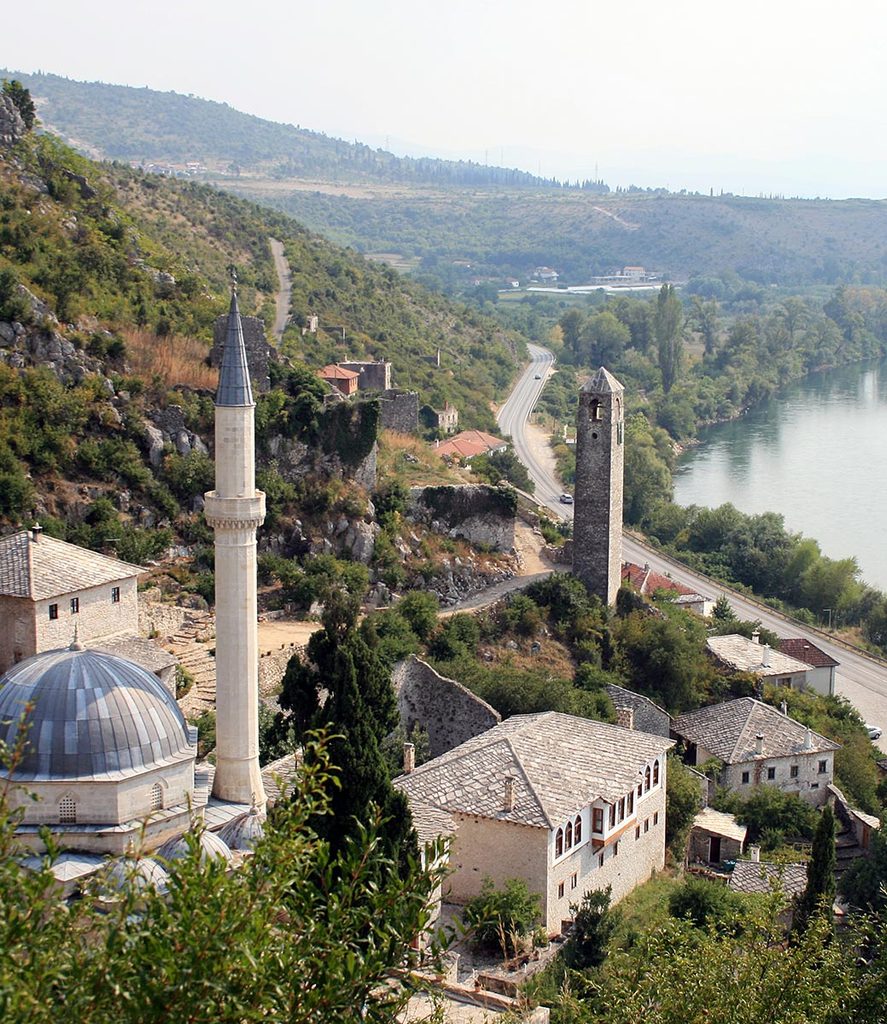
Počitelj is one of the most distinctive historic destinations in Bosnia and Herzegovina. Built into a steep hillside overlooking the Neretva River, this small fortified village is known for its stone houses, narrow streets, Ottoman architecture and impressive views across the valley.
Located in Herzegovina, around 25 kilometres south of Mostar, Počitelj is an easy stop for visitors exploring the region. Despite its relatively small size, the village has a remarkable collection of historic buildings, including a medieval fortress, a 16th-century mosque, a clock tower and a traditional Ottoman residential complex.
Its combination of architecture, history and natural surroundings makes Počitelj one of the most memorable places to visit in southern Bosnia and Herzegovina.
A Brief History of Počitelj
The origins of Počitelj date back to the medieval period. It is traditionally believed that the fortified settlement was established in 1383 during the reign of Bosnian King Stjepan Tvrtko I. Its position above the Neretva River gave it considerable strategic importance, allowing the settlement to control an important route through the region.
Počitelj was captured by the Ottoman forces in 1471 and subsequently developed into an important administrative and military centre. Between the 16th and 18th centuries, the town acquired many of the buildings that define its appearance today, including the mosque, religious school, public bathhouse and clock tower.
After the Austro-Hungarian occupation of Bosnia and Herzegovina in 1878, Počitelj gradually lost its strategic importance. Its historic architecture remained, however, and the settlement later became known as an artists’ colony.
The village suffered extensive damage during the 1990s war, including the destruction of important historic buildings. Restoration work subsequently helped recover much of its architectural heritage.
Today, Počitelj is included on UNESCO’s Tentative List of World Heritage Sites, recognising its historical and architectural significance. This is a preliminary listing and should not be confused with full World Heritage inscription.
1. Explore Počitelj Fortress
The fortress, known locally as Kula, is one of the most recognisable landmarks in Počitelj. Positioned high above the village, it once formed the centre of the settlement’s defensive system and offered a strategic view over the Neretva Valley.
The fortress dates back to the medieval period and was expanded and modified during the Ottoman era. Its elevated position made it an important defensive structure, protecting the settlement and the route along the river.
Reaching the upper fortress involves climbing steep stone paths and steps. The effort is worthwhile for the panoramic views over the village, the Neretva River and the surrounding landscape.
The fortress is also an excellent place to appreciate the unusual layout of Počitelj, with its stone buildings arranged along the hillside below.
2. Visit the Hadži-Alija Mosque
The Hadži-Alija Mosque, also known as the Šišman Ibrahim-paša Mosque, is one of the finest examples of Ottoman religious architecture in Počitelj.
Built in 1562-1563, the mosque occupies a prominent position in the historic centre. Its elegant dome, stone construction and distinctive minaret make it one of the village’s most important architectural landmarks.
The mosque was severely damaged during the 1990s war, but it was subsequently restored and returned to its religious function.
Visitors can admire the building from outside and, when access is permitted, see its interior. As it remains an active place of worship, visitors should dress respectfully and follow any instructions displayed at the entrance.
3. Walk Through the Stone Streets of the Old Town
One of the best ways to experience Počitelj is simply to walk through its narrow stone streets.
The village follows the natural slope of the hillside, with traditional houses, stone walls, small courtyards and stairways creating a distinctive architectural setting. Many of the houses feature traditional stone roofs and wooden details, reflecting the building styles of the region.
The streets connect the main historic landmarks, so visitors can explore the village at a relaxed pace. Along the way, there are several viewpoints overlooking the river and surrounding countryside.
Remember that Počitelj is not simply an open-air museum. People still live in the village, so respect private property and avoid entering courtyards or buildings without permission.
4. See the Gavrankapetanović House
The Gavrankapetanović House is one of the most important examples of traditional residential architecture in Počitelj.
This historic complex consists of several buildings constructed during the 16th and 17th centuries. It belonged to the Gavrankapetanović family and is particularly interesting for its traditional layout and architectural details.
The complex was later adapted for use as an artists’ colony, helping establish Počitelj as a meeting place for artists, writers and other creative visitors.
The artists’ colony was founded in the 1960s and became an important part of the village’s cultural identity. The buildings were badly damaged during the war but subsequently restored.
5. Find the Ottoman Clock Tower
The Sahat-Kula, or clock tower, is another characteristic feature of Počitelj’s historic centre.
Built during the Ottoman period, it formed part of the town’s public infrastructure and helped residents keep track of time. Its position among the stone houses contributes to the distinctive skyline of the village.
The clock tower is best appreciated as part of a wider walk through the historic settlement, alongside the mosque, fortress and other Ottoman-era buildings.
6. Discover the Historic Hammam and Medresa
Počitelj once had many of the public and religious institutions typical of an important Ottoman settlement.
Among them were a hammam, a traditional public bathhouse, and a medresa, an Islamic religious school. These buildings formed part of a wider complex of public facilities serving the town’s population.
Although they are less prominent than the mosque and fortress, they help visitors understand how Počitelj developed during the Ottoman period. Their presence also illustrates that the village was once more than a small fortified settlement.
7. Enjoy the Views over the Neretva River
The location of Počitelj is one of its greatest attractions. From the upper parts of the village, visitors can enjoy wide views across the Neretva River and the surrounding Herzegovinian landscape.
The contrast between the stone buildings, green river valley and rocky hills creates an especially attractive setting for photography.
The best viewpoints are generally found along the paths leading towards the fortress. However, you do not need to reach the very top to enjoy the scenery. Several lower viewpoints also offer beautiful views of the village and river.
Getting to Počitelj
Počitelj is located in southern Bosnia and Herzegovina, in the municipality of Čapljina. It lies approximately 25 kilometres south of Mostar, along the main road connecting Mostar with Čapljina and the Croatian border.
By car: Driving is the easiest way to reach Počitelj. From Mostar, the journey generally takes around 25-30 minutes, depending on traffic. Parking is available near the lower part of the village, from where visitors continue on foot.
By bus: Some intercity buses travelling between Mostar and Čapljina or further south pass the Počitelj area. However, services and stopping arrangements can vary. Confirm with the bus operator whether the bus stops close to the village before travelling.
On an organised tour: Počitelj is frequently included in day trips from Mostar, often combined with other Herzegovina attractions such as Blagaj and Kravica Waterfalls. This can be a convenient option if you do not have a car.
Best Time to Visit Počitelj
Počitelj can be visited throughout the year, but spring and autumn are particularly pleasant. Temperatures are generally more comfortable for walking up the steep stone streets and exploring the fortress.
Summer is also popular, although the hillside can become very hot, with limited shade along some paths. If visiting during July or August, consider arriving early in the morning or later in the afternoon.
Wear comfortable shoes with good grip, as the old stone steps and paths can be uneven and slippery. Carry drinking water, especially during the warmer months.
How Much Time Do You Need in Počitelj?
Most visitors need around one to two hours to explore the main parts of Počitelj, although you may want to stay longer if you plan to visit the fortress, spend time at the viewpoints and explore the historic buildings in more detail.
The village is small, so it can easily be included in a day trip from Mostar. Combining it with Blagaj or Kravica Waterfalls is another popular option, although you should allow enough time at each stop rather than trying to rush through all three.
Počitelj is a relatively small destination, but its historic architecture, hillside setting and views over the Neretva make it one of the most distinctive places to visit in Herzegovina.