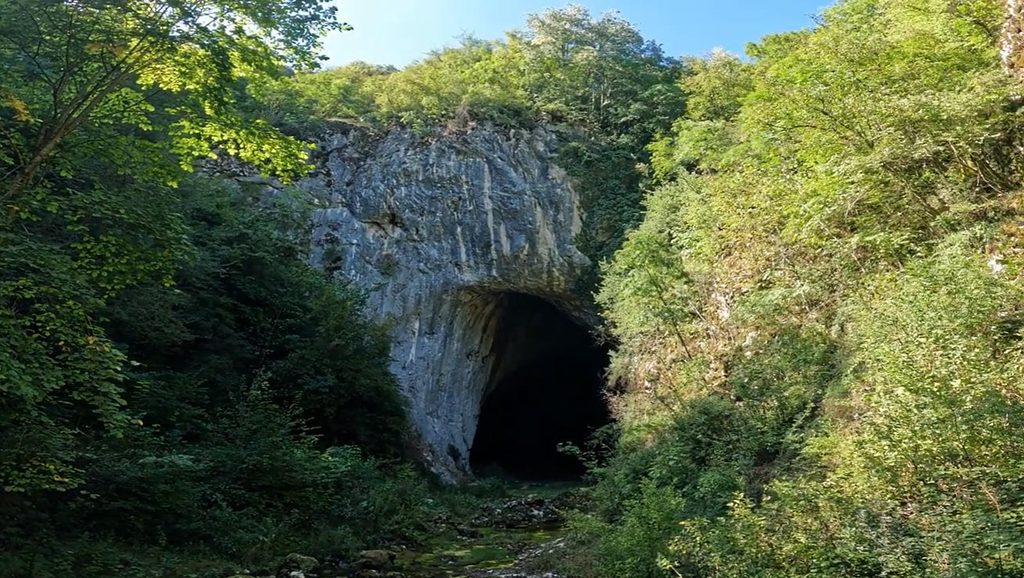
Dabar Cave, known locally as Dabarska Pećina, is an interesting natural attraction near Sanski Most in north-western Bosnia and Herzegovina. Located beside the source of the Dabar River, the cave is part of a distinctive karst landscape where underground water emerges from the rock and forms a clear river.
The site is notable for several reasons. Its large entrance opens into an extensive underground chamber; archaeological discoveries indicate prehistoric human activity, and scientific research has identified rare cave-dwelling species in its waters. The surrounding landscape, with the river spring and green valley, also makes it an appealing destination for visitors interested in less familiar natural places.
Dabar Cave is not a conventional tourist cave with illuminated passages and a developed visitor route. Water levels can change considerably, and access conditions should be checked before visiting. However, the spring and the area around the entrance offer an opportunity to discover a fascinating part of the natural heritage of the Sanski Most region.
Where Is Dabar Cave?
Dabar Cave is situated in Donji Dabar, in the municipality of Sanski Most, approximately 6 to 7 kilometres south-west of the town. It lies in a karst landscape on the slopes of Mount Grmeč, beside the source of the Dabar River.
The cave is closely connected to the river’s hydrological system. Water emerges from the underground passages and joins the main spring outside, forming the Dabar River, which flows for several kilometres before reaching the Sana River.
The location is sometimes referred to as Dabarsko Vrelo, meaning the Dabar Spring. When searching for the attraction, both names are useful, as the cave and the river source are closely associated.
What Makes Dabar Cave Special?
The most striking feature of Dabarska Pećina is its large entrance and the underground space behind it. The entrance is approximately 10 metres wide and 15 metres high, opening into a substantial chamber. Scientific descriptions record a cave system extending for around 630 metres, with narrower passages and smaller tunnels beyond the main chamber.
The cave is an active part of the local water system. Depending on rainfall and groundwater levels, water can collect inside the cave and sometimes flow out through the entrance. During periods of high water, the entrance area and internal passages can become flooded, making further exploration impossible.
This changing relationship between the cave and the river is one of its most interesting natural characteristics. Rather than being a dry underground attraction, Dabarska Pećina is closely connected to the movement of water through the surrounding limestone.
The Source of the Dabar River
The Dabar River begins at the spring beside the cave. Its clear water emerges from the karst underground system and flows through the surrounding landscape before joining the Sana.
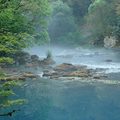
The spring is an attractive feature in its own right. The combination of the rocky cave entrance, the water emerging from underground and the green surroundings creates a peaceful natural setting.
The river is also of interest to researchers studying karst hydrology and freshwater ecosystems. Its flow can vary significantly according to rainfall and groundwater conditions, illustrating how quickly water levels can change in this type of landscape.
Visitors should remember that the water is exceptionally cold and that the spring is not a designated swimming area. It is best enjoyed as a natural attraction rather than a place for bathing.
Prehistoric Discoveries at Dabarska Pećina
Dabar Cave is important not only for its geology but also for its archaeological history. Excavations and investigations have revealed prehistoric material inside the cave, including pottery fragments, animal bones and other remains associated with human activity.
Archaeological research has examined deposits in the cave and identified material dating back several thousand years. The discoveries provide evidence that people used the cave in prehistoric times, although the details and interpretation of individual finds belong to specialist archaeological research.
The wider area also contains traces of earlier human settlement. These discoveries help explain why the cave is considered part of the cultural as well as natural heritage of the Sanski Most region.
The cave and its surroundings are recognised as the Dabarske Caves Cultural Landscape, which has national monument status in Bosnia and Herzegovina. The protected area brings together the natural spring, cave and evidence of traditional human use of the landscape.
Rare Wildlife in the Cave
The underground waters of Dabarska Pećina provide a habitat for specialised aquatic and cave-dwelling species. Research has recorded the olm, also known as the human fish, a pale amphibian adapted to life in underground waters.
The cave is also important for its subterranean invertebrates. Research has identified the cave shrimp Troglocaris bosnica, a species associated with this cave and another nearby underground habitat, as well as other cave-dwelling organisms.
These species are adapted to dark, underground environments and depend on clean freshwater habitats. Their presence highlights the ecological importance of the Dabar cave system.
For this reason, visitors should avoid disturbing the water, collecting animals or entering restricted sections of the cave. Protecting the underground environment is particularly important because these specialised habitats can be sensitive to pollution and changes in water conditions.
Visiting Dabar Cave
Dabar Cave is a natural site rather than a developed show cave. Visitors should not expect guided tours, artificial lighting, handrails or a clearly marked underground visitor route.
The approach is generally described as involving a gravel road and a short walk from the parking area. The final walking section is approximately 400 metres, although local road and access conditions should be checked before travelling.
A torch may be useful if you are visiting the entrance area, but this does not mean that it is safe to explore the deeper passages. The cave can contain water, and heavy rainfall or snowmelt can raise levels considerably. Do not enter flooded or restricted sections.
The municipality identifies the Dabarske Caves as a protected cultural landscape and advises visitors to respect protection rules and check access arrangements in advance. There have also been reports of planned improvements to the visitor facilities, so entrance arrangements and any charges may change.
For a visit focused on the spring and the surroundings, allow time to enjoy the landscape without treating the cave as an underground adventure activity.
Other Places to Visit Near Dabar Cave
Dabar Cave is close to several other natural attractions, making it possible to explore more of the Sanski Most region during the same trip. See Bobijaško Oko too.
Bliha Waterfall
Bliha Waterfall, also known as Blihin Skok, is one of the best-known natural attractions near Sanski Most. The waterfall is famous for its dramatic drop over a rocky cliff into a pool surrounded by woodland.
It is an excellent addition to a visit to Dabar Cave. The two sites are frequently recommended together as a nature excursion from Sanski Most, offering two different landscapes: an underground river source and a forest waterfall.
Read our separate guide to Bliha Waterfall for information about the walking route, the surrounding nature park and what to expect during a visit.
Sanski Most
The town of Sanski Most is a convenient base for exploring the area. Known for its rivers and green surroundings, it offers a place to stop for food, accommodation and other practical services.
The Sana River runs through the town, while the wider municipality contains numerous springs, streams and natural landscapes. Visitors can combine a trip to Dabar Cave and Bliha Waterfall with a walk around the town.
Una National Park
Una National Park is another major natural attraction in north-western Bosnia and Herzegovina. It is known for the Una River, its waterfalls and the landscapes around Štrbački buk and Martin Brod.
The park is considerably farther from Dabar Cave than the nearby Sanski Most attractions, so it is better treated as another stop on a wider journey through the region rather than part of the same short excursion.
If you are planning to explore more of this part of the country, see our guide to Una National Park, which covers its waterfalls, outdoor activities and main visitor areas.
How to Get to Dabar Cave
The most practical way to reach Dabar Cave is by car. From Sanski Most, follow the local road towards Donji Dabar and look for signs directing visitors to Dabarska Pećina and the Dabar spring.
The final approach includes a gravel section, and road conditions can vary. Some local sources recommend extra care, particularly after rain. Check the condition of the access road before setting off and avoid attempting the approach if conditions are unsuitable for your vehicle.
Public transport to the cave itself is limited. Although Sanski Most has bus connections with other towns in the region, reaching Donji Dabar generally requires a taxi or private transport.
Is Dabar Cave Worth Visiting?
Dabar Cave is an interesting destination for visitors who want to discover a less familiar part of Bosnia and Herzegovina. Its large entrance, underground river system, prehistoric archaeological finds and specialised wildlife make it more than just another cave in the countryside.
It is particularly worthwhile for travellers exploring the Sanski Most area, where it can be combined with Bliha Waterfall and other natural attractions.
The main thing to remember is that Dabarska Pećina is a sensitive natural and archaeological site, not a fully equipped tourist cave. Check local access information, respect protection rules and enjoy the spring and surrounding landscape without disturbing the underground environment.
Similar info:
 Janjske Otoke, Bosnia and Herzegovina: A Guide to the Waterfalls and River Landscapes
 Bobijaško Oko, Bosnia and Herzegovina: The Mysterious Karst Lake near Sanski Most
 Bliha Waterfall, Bosnia and Herzegovina: A Guide to Blihin Skok
 Una National Park, Bosnia and Herzegovina: Waterfalls, Rafting and Outdoor Activities